
Wednesday, January 9, 2013

Friday, December 28, 2012
Be brave
No one was ever meant to be strong all the time. But be strong anyway. Who cares if the ground is wet or if the leaves are slippery? Run down the path anyway. If you fall, you just need to get back up and keep going.

Jump forward with both feet and a courageous heart. Just be brave.

Jump forward with both feet and a courageous heart. Just be brave.
Tuesday, December 25, 2012
Cookie greed
Enjoy the cookie, instead of worrying about when you'll get the next one.

With all the unsolicited advice we get on multitasking, and the long list of accomplishments that everyone now attaches to their walking resume (i.e. what defines who people are as opposed to what they are), we are always running, always moving to the next thing, always checking email while waiting in line, always flipping through photos while on a phone call while running on a treadmill while... doing five other things. And then we realize that we've lived through the moment without really living through it. Similarly, some people worry so much about how to make the moment perfect that they forget to actually enjoy it. Or they worry about it never coming again that they forget to experience it the one time it will happen. How silly is it to choose not to experience something because you're worried it will be so great that it would be a shame if it happened just the one time and never again? It's like saying "A magical health pill? Only one left? No thanks, it'll just spoil my greedy, one-life-to-live mind."
Choose to live through the moment -- and really live through it. Forget about the future, and immerse yourself in all the joys and sights and feelings of that moment, then and there. If you choose one moment over the another, enjoy the one you chose instead of feeling guilty or doubtful or resentful or worried about your choice. Choosing not to do this is like letting someone else dictate how you should feel and who you should be. No one has the right to do that, and, even more especially, you have the right to enjoy the moments that are given to you and the moments you choose to take.

With all the unsolicited advice we get on multitasking, and the long list of accomplishments that everyone now attaches to their walking resume (i.e. what defines who people are as opposed to what they are), we are always running, always moving to the next thing, always checking email while waiting in line, always flipping through photos while on a phone call while running on a treadmill while... doing five other things. And then we realize that we've lived through the moment without really living through it. Similarly, some people worry so much about how to make the moment perfect that they forget to actually enjoy it. Or they worry about it never coming again that they forget to experience it the one time it will happen. How silly is it to choose not to experience something because you're worried it will be so great that it would be a shame if it happened just the one time and never again? It's like saying "A magical health pill? Only one left? No thanks, it'll just spoil my greedy, one-life-to-live mind."
Choose to live through the moment -- and really live through it. Forget about the future, and immerse yourself in all the joys and sights and feelings of that moment, then and there. If you choose one moment over the another, enjoy the one you chose instead of feeling guilty or doubtful or resentful or worried about your choice. Choosing not to do this is like letting someone else dictate how you should feel and who you should be. No one has the right to do that, and, even more especially, you have the right to enjoy the moments that are given to you and the moments you choose to take.
Enjoy the time you have instead of complaining about the time you don't.
Sunday, November 4, 2012
Be everything (but don't be too much)
"You must be patient as a sick man and confident as a convalescent; for perhaps you are both. And more: you are the doctor too, who has to watch over himself." The point being that you should be everything -- from a leader to a follower, from soup to nuts, from earth to sky -- because no one else will be everything for you.

At the same time, do not try to overdo your doings. "Do not observe yourself too much. Do not draw too hasty conclusions from what happens to you; let it simply happen to you."
From the wise and double-edged musings of Rainer Maria Rilke in "Letters to a Young Poet".
Sunday, October 14, 2012

Friday, September 14, 2012
Morphisms
It's funny how we personify objects. This is the king of the jungle. We took our highest-ranking human and gave that name to the highest-ranking tree. This tree has been growing for years. It has witnessed years and years of seasons, of people old and new, of moons rising and falling, of plants dying and growing, of rain and sleet and fire. This tree is history personified. Consider the following thought experiment: what if we turn personification on it's head, and take the traits of inanimate objects and apply them to humans?

Still. Stable. Grounded. Mature. All-seeing. These are pretty good examples of things we may want to be called. Weird, how inanimate objects don't objectify humans.
Fun fact: Chremamorphism is the act of applying the traits of objects to people.

Still. Stable. Grounded. Mature. All-seeing. These are pretty good examples of things we may want to be called. Weird, how inanimate objects don't objectify humans.
Fun fact: Chremamorphism is the act of applying the traits of objects to people.
Thursday, September 13, 2012
Leave your mark...
...wherever you go. Even if it is in the pins-and-magnet toy in a tech museum.

Step foot on a new mountain -- first a real one and then a metaphorical one. Hug someone who looks like they are having a bad day. Try a new recipe with a twist and keep honing it, if you like it, until you reach your own perfection -- one good dish is better than thirty sloppy ones. Bring your own ideas to the table no matter how silly you think they are -- if they are creative no one can fault you for not being brave and at the least it will generate another great idea. Leave your mark, whatever you do.
Saturday, August 18, 2012
Is this a duck?
This is a duck. Viewed from a very weird perspective, but a duck nevertheless.

Availability bias is an interesting phenomenon in which perspective plays an important role. Availability bias occurs when we overestimate the probability of an event because we associate it with a memorable event. For example, death from cancer, intentional self-harm, and a fall is more likely than from a plane crash but because airplane incidents are more heavily covered in the media, people over-inflate their probability and modify their behavior accordingly [1]. As another example, if you know a relative who got food poisoning from eating a certain cuisine, you're more likely to stay away from those foods even though your chance of getting food poisoning remain the same.
Fun fact: Psychologists Amos Tversky and Daniel Kahneman pioneered the study of availability bias. Kahneman eventually won the 2002 Nobel Prize in Economics for his work in the field of heuristics and biases.
[1] National Safety Council Injury and Death Statistics

Availability bias is an interesting phenomenon in which perspective plays an important role. Availability bias occurs when we overestimate the probability of an event because we associate it with a memorable event. For example, death from cancer, intentional self-harm, and a fall is more likely than from a plane crash but because airplane incidents are more heavily covered in the media, people over-inflate their probability and modify their behavior accordingly [1]. As another example, if you know a relative who got food poisoning from eating a certain cuisine, you're more likely to stay away from those foods even though your chance of getting food poisoning remain the same.
Fun fact: Psychologists Amos Tversky and Daniel Kahneman pioneered the study of availability bias. Kahneman eventually won the 2002 Nobel Prize in Economics for his work in the field of heuristics and biases.
[1] National Safety Council Injury and Death Statistics
Tuesday, August 7, 2012
Incubate
If you let an idea stew on its own while you've stepped away, it's usually suddenly much clearer when you come back. The odd shapes in the picture suddenly look like something real, the darker parts have adjusted to your eyes, and everything finally seems to fit together.

This is the second phase of creativity: preparation, incubation, illumination, and verification. You start out by assessing the problem and gathering information. Then, during incubation, the brain subconsciously processes the information even though you're not actively thinking about it. The thought then reappears into conscious awareness, and finally you validate and verify.
This 4-stage model was presented by Wallas in 1926, but how the incubation phase actually works is still an open question. It's been suggested that the break from conscious thought allows us return to the problem with fresh eyes so that we can restart from being fixated on the wrong perspective. The alternative process is that leaving a task knowing you will come back to it allows the brain to work on it subconsciously in the meantime [1]. In either case, the effect has been happily experimentally noted many, many times. Like Don Draper says to Peggy in Mad Men, "Just think about it. Deeply. Then forget it, and an idea will jump up in your face".
[1] Creative People Use Nonconscious Processes to Their Advantage

This is the second phase of creativity: preparation, incubation, illumination, and verification. You start out by assessing the problem and gathering information. Then, during incubation, the brain subconsciously processes the information even though you're not actively thinking about it. The thought then reappears into conscious awareness, and finally you validate and verify.
This 4-stage model was presented by Wallas in 1926, but how the incubation phase actually works is still an open question. It's been suggested that the break from conscious thought allows us return to the problem with fresh eyes so that we can restart from being fixated on the wrong perspective. The alternative process is that leaving a task knowing you will come back to it allows the brain to work on it subconsciously in the meantime [1]. In either case, the effect has been happily experimentally noted many, many times. Like Don Draper says to Peggy in Mad Men, "Just think about it. Deeply. Then forget it, and an idea will jump up in your face".
[1] Creative People Use Nonconscious Processes to Their Advantage
Monday, July 16, 2012
On the sunny road
How you see the road ahead is completely up to you. Leaves to play in? Dust and dirt? A silent forest canopy to afford you that infinite moment of peace? How you see the road ahead is completely up to you.

This picture reminds me of the song Sunny Road by Emiliana Torrini. Quiet, twangy, cautious, but completely optimistic.
Friday, July 6, 2012

Thursday, June 28, 2012
Spot the stork
Sometimes it's hard to see what's right in front of you.

So very well are the good things hidden. When you finally see it, try not to forget it's there. If you take your eyes off it for one second, don't lose it again. When you delight in its discovery, be wary of getting too close because sometimes it will just fly away before you can grasp it at its fullest. And, if it does fly away, then just be content with being grateful that you saw it once, and look forward to finding the other beautiful storks that the world is hiding.
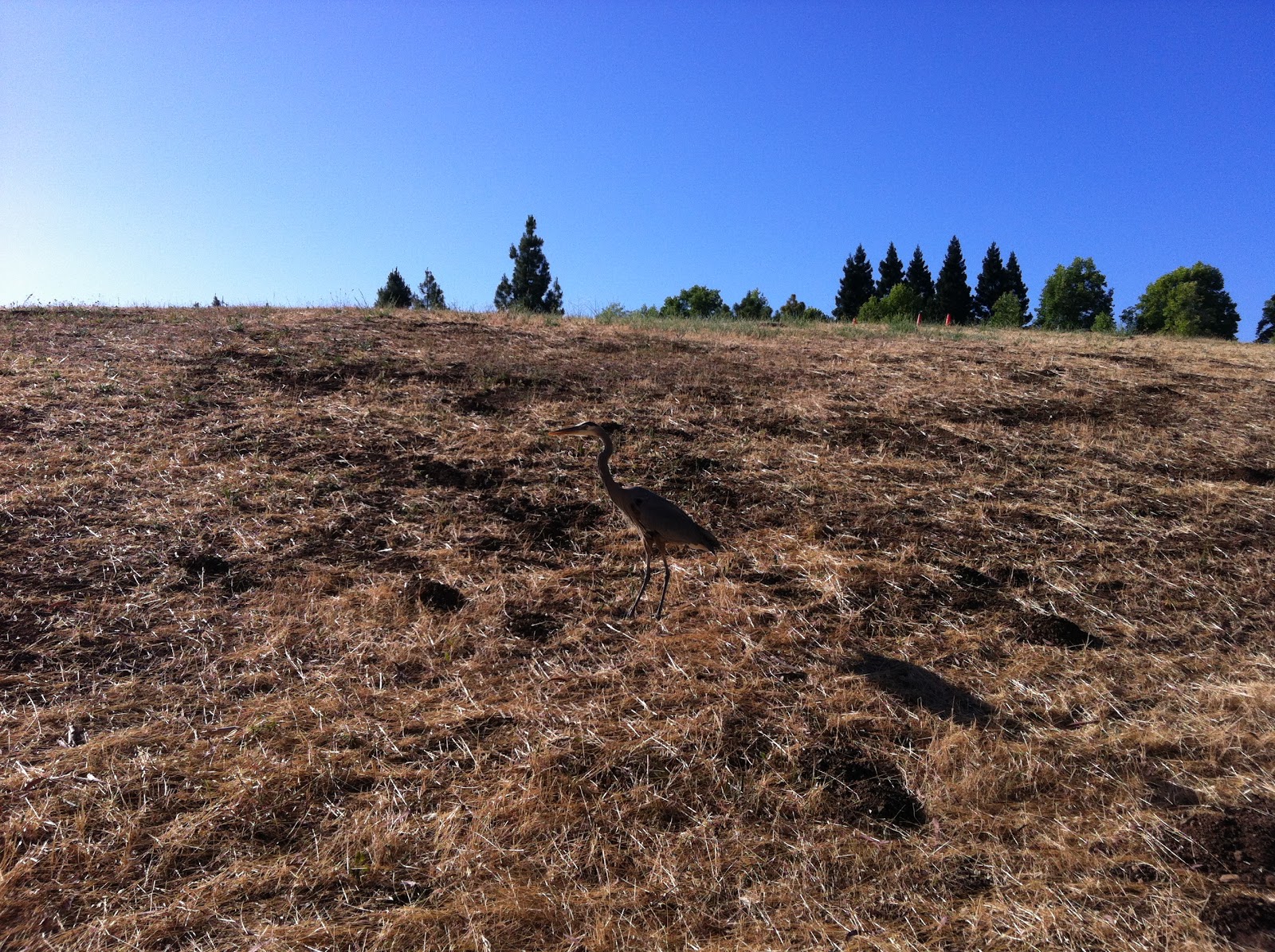
So very well are the good things hidden. When you finally see it, try not to forget it's there. If you take your eyes off it for one second, don't lose it again. When you delight in its discovery, be wary of getting too close because sometimes it will just fly away before you can grasp it at its fullest. And, if it does fly away, then just be content with being grateful that you saw it once, and look forward to finding the other beautiful storks that the world is hiding.
Thursday, June 14, 2012
Treat yourself to a "we" moment
The "you" moments (cf: last post) need some "we" moments.

Don't forget about your family. Don't forget about your friends. Don't forget the people who helped you and help you and might help you. Inherently, even acts we do for other people actually do have a personal gain aspect: even in doing something for a loved one, we find comfort and happiness in their happiness. This is perhaps the reason why we are compelled to help them out in the first place. Economically speaking, there is no real incentive to go beyond that, except for the fact that friendship (or love or whatever the nature of the relationship) is not usually unconditional. So being regularly inconsiderate -- be it forgetting to call or not keeping in touch or being disrespectful or never compromising -- could potentially cut the relationship short. After all, economically speaking, in that scenario, the incentive to maintain the friendship would be lost to the other person.
Many studies claim that people with good friendship live longer or are "happier". For example, the documentary "Happy" explores the lives of a variety of people whose happiness depends more on these interactions than on material goods like money. I think both aspects are important, for different reasons, to an well-lived life. And just like we put effort into maintaining our job security, we must put effort into maintaining our relationships. Relationships are mutual. Sometimes we have to have to make decisions that are economically disadvantageous for us in the short term, but give us a different vantage point that allows us reach a better part of the "friendship-space" later on. Economically speaking :-)
[A different perspective on "lose the battle, win the war", optimization techniques that decrease the objective function at a local step to boost it later, and many other theories of life].

Don't forget about your family. Don't forget about your friends. Don't forget the people who helped you and help you and might help you. Inherently, even acts we do for other people actually do have a personal gain aspect: even in doing something for a loved one, we find comfort and happiness in their happiness. This is perhaps the reason why we are compelled to help them out in the first place. Economically speaking, there is no real incentive to go beyond that, except for the fact that friendship (or love or whatever the nature of the relationship) is not usually unconditional. So being regularly inconsiderate -- be it forgetting to call or not keeping in touch or being disrespectful or never compromising -- could potentially cut the relationship short. After all, economically speaking, in that scenario, the incentive to maintain the friendship would be lost to the other person.
Many studies claim that people with good friendship live longer or are "happier". For example, the documentary "Happy" explores the lives of a variety of people whose happiness depends more on these interactions than on material goods like money. I think both aspects are important, for different reasons, to an well-lived life. And just like we put effort into maintaining our job security, we must put effort into maintaining our relationships. Relationships are mutual. Sometimes we have to have to make decisions that are economically disadvantageous for us in the short term, but give us a different vantage point that allows us reach a better part of the "friendship-space" later on. Economically speaking :-)
[A different perspective on "lose the battle, win the war", optimization techniques that decrease the objective function at a local step to boost it later, and many other theories of life].
Treat yourself to a "you" moment
Don't forget to focus on you and only you.

It's easy to get wrapped up in being busy, in taking care of others, in doing this and that and going here and there, in pushing yourself to the limit, in staying up late to finish one last thing, in getting up early to challenge your body with a run even though you're too tired, in putting someone else before oneself...
But because it's easy doesn't mean it's always right. The body knows how to signal stress so pay attention to unusual changes and rest assured (pun intended) that you can take a break now to be more efficient tomorrow.

It's easy to get wrapped up in being busy, in taking care of others, in doing this and that and going here and there, in pushing yourself to the limit, in staying up late to finish one last thing, in getting up early to challenge your body with a run even though you're too tired, in putting someone else before oneself...
But because it's easy doesn't mean it's always right. The body knows how to signal stress so pay attention to unusual changes and rest assured (pun intended) that you can take a break now to be more efficient tomorrow.
Tuesday, May 29, 2012
If the company of good friends was a picture...
I'd imagine that if the company of good friends looked like something, it might look a little like a chandelier on a purple swirly ceiling with colorful lanterns and a whimsical curtain.

[In the weirdest way, this is reminiscent of Marc Chagall's "La Mariée" (The Bride). The way the lanterns don't really match the chandelier (why is a goat playing a violin?), the way everything stands out and blends together at the same time (the warm and cool colors), the wistfulness of the imagery (the young bride to be), the way your eyes can't stop moving (the curves in the image)...]

[In the weirdest way, this is reminiscent of Marc Chagall's "La Mariée" (The Bride). The way the lanterns don't really match the chandelier (why is a goat playing a violin?), the way everything stands out and blends together at the same time (the warm and cool colors), the wistfulness of the imagery (the young bride to be), the way your eyes can't stop moving (the curves in the image)...]
Saturday, May 19, 2012
Simply simple
Simple, elegant, clean.

In writing, the (well-known) principle is called KISS (Keep it Simple, Stupid).
In architecture and other art forms, it is called minimalism. All non-essential elements are stripped away so that only the essence of the subject is left. Minimalist architecture, inspired by Zen philosophy, became popular in the 1980s in London and New York. Minimalist design uses simple geometric forms, repetitions, basic materials, light and flow of light, and connection to the surrounding environment. Value is achieved through simple forms.
"How to be Less Stupid" is a nice post about the things we do that take away from our intelligence. Most of the examples are related to ways in which we complicate and bog down our thoughts and feelings. Simplifying our lives of unnecessary worrying, over-analysis of straightforward situations, mulling, second-guessing, regret, pity, doubt is like freeing up valuable real estate in our brains for much better things.
Actually simplifying things though, is the hard part. As Blaise Pascal put it: "I have made this letter longer than usual because I lack the time to make it short". But at least if you recognize it, you're one step closer to making it happen!

In writing, the (well-known) principle is called KISS (Keep it Simple, Stupid).
In architecture and other art forms, it is called minimalism. All non-essential elements are stripped away so that only the essence of the subject is left. Minimalist architecture, inspired by Zen philosophy, became popular in the 1980s in London and New York. Minimalist design uses simple geometric forms, repetitions, basic materials, light and flow of light, and connection to the surrounding environment. Value is achieved through simple forms.
"How to be Less Stupid" is a nice post about the things we do that take away from our intelligence. Most of the examples are related to ways in which we complicate and bog down our thoughts and feelings. Simplifying our lives of unnecessary worrying, over-analysis of straightforward situations, mulling, second-guessing, regret, pity, doubt is like freeing up valuable real estate in our brains for much better things.
Actually simplifying things though, is the hard part. As Blaise Pascal put it: "I have made this letter longer than usual because I lack the time to make it short". But at least if you recognize it, you're one step closer to making it happen!
Wednesday, May 9, 2012

Thursday, May 3, 2012
On your merry, serendipitous way
It's easier to think about the next step you're going to take -- in fact, your feet do it for you -- rather than what you're going to do at the end of the road.

The universe has a funny way of either burying you further when you're already in deep, or subtly throwing you little bits of cheer and serendipity to lift you back up. Like if a lovely little flower falls from the tree nearby and delightfully ends up perched on your shoe like a decoration. (Could the universe really have intended so much meaning? -- But) you could just take it to be a little reminder of beauty everywhere if you just cheer-up and look, or of fortunate accidents everywhere if you just let them happen to you instead of wallowing in unproductive blues, or of the fact that although there are a lot of little things that make you scared or sad or anxious, there are also a lot of little things that bring a smile to your face. If you take the bad things in stride and take the good things with self-propagating joy and appreciation, then maybe you can be on your merry way one step at a time, and none will be the wiser to your happy secret except you and the universe.
Thursday, April 26, 2012
Eat, drink, and be healthy
Everything in moderation - which means you can eat that piece of chocolate or have that small glass of wine as long as you don't overdo it.

Here are some concoctions I've discovered have enough of a twist to keep things exciting but are also easy to incorporate into a busy day:
Fun fact: If you're like me and stubbornly decided not to trust that tomatoes keep their flavor better outside the fridge, I recommend just trying the experiment...

Here are some concoctions I've discovered have enough of a twist to keep things exciting but are also easy to incorporate into a busy day:
- easy + healthy: garbanzo beans (just boil) and little cheese squares on top of a salad
- fast + healthy: spinach (just cook in a pan) with fish or egg or anything else
- snack-ish + healthy: yogurt, blueberries, and granola with a few shavings of chocolate on top
- refreshing + healthy: water with a slice of lemon or a slice of cucumber in the morning
- universal + healthy: add spice to any dish to give it a different taste (turmeric, rosemary, dill, etc)
- just easy: water!
Fun fact: If you're like me and stubbornly decided not to trust that tomatoes keep their flavor better outside the fridge, I recommend just trying the experiment...
Monday, April 23, 2012
Put on your big-picture glasses
Say you're standing in front of a cliff, like the one below. All you can see is rock -- in front, above, all around -- and conclude that the path is dangerous, daunting, and can't be scaled. Perhaps you smile a little because looking closer you see someone has carved a cute little heart into the rock, but love is fickle man, and right now you just really need to get to unstuck.

So you step back and see all sorts of things... that there's actually a path around the cliff, that it gets less impressive farther down, and that there's a pleasant walk along the beach which might make you happier than the overhead climb... a panoramic solution.

"Look at the bigger picture" is not news (cf. [1], [2], [3], [4]) but it's easy enough to forget or take for granted. In addition to more easily re-assessing your options, when you step back, you can also re-asses your goals, and choose the best solution that gets you to the better goal. It's also pretty fun to try implementing the big-picture view in almost any activity. If you're reading a research article, think about how it applies to your work or to a peer's work. If you're coding up an algorithm for class, think about how it could work for another problem that, say, an architect would want to solve. Ask friends how they'd change their job, how they like it, how it affects the industry, the country, the economy, culture, people's lives. If you wear your big-picture glasses often enough, your eyes will adjust. Then when you really need it, you'll just see it.
Fun fact: "Panorama" was coined in 1792 by Irish painter Robert Barker. His panoramas were displayed in a London building built specifically for viewing large panoramic paintings.
[1] General life/work advice: When to give up on your goals
[2] In the lean start-up: employ rapid hypothesis testing and incorporate customer feedback earlier so that your goals change function of demand
[3] In chess: you plan a global strategy instead of looking at a single corner of the board
[4] In cells in the body: in addition to proximate motifs that signal for a gene to "turn on", there are also key distal regulatory elements many, many bases upstream regulating expression
[5] In the environment: if you set adrift a piece of wood on one side of the ocean, it eventually makes it's way to the other side (Japanese Tsunami Debris Reaches Alaska Shores)
Subscribe to:
Posts (Atom)